
Mixing Business and Friends: Frequently Asked Questions
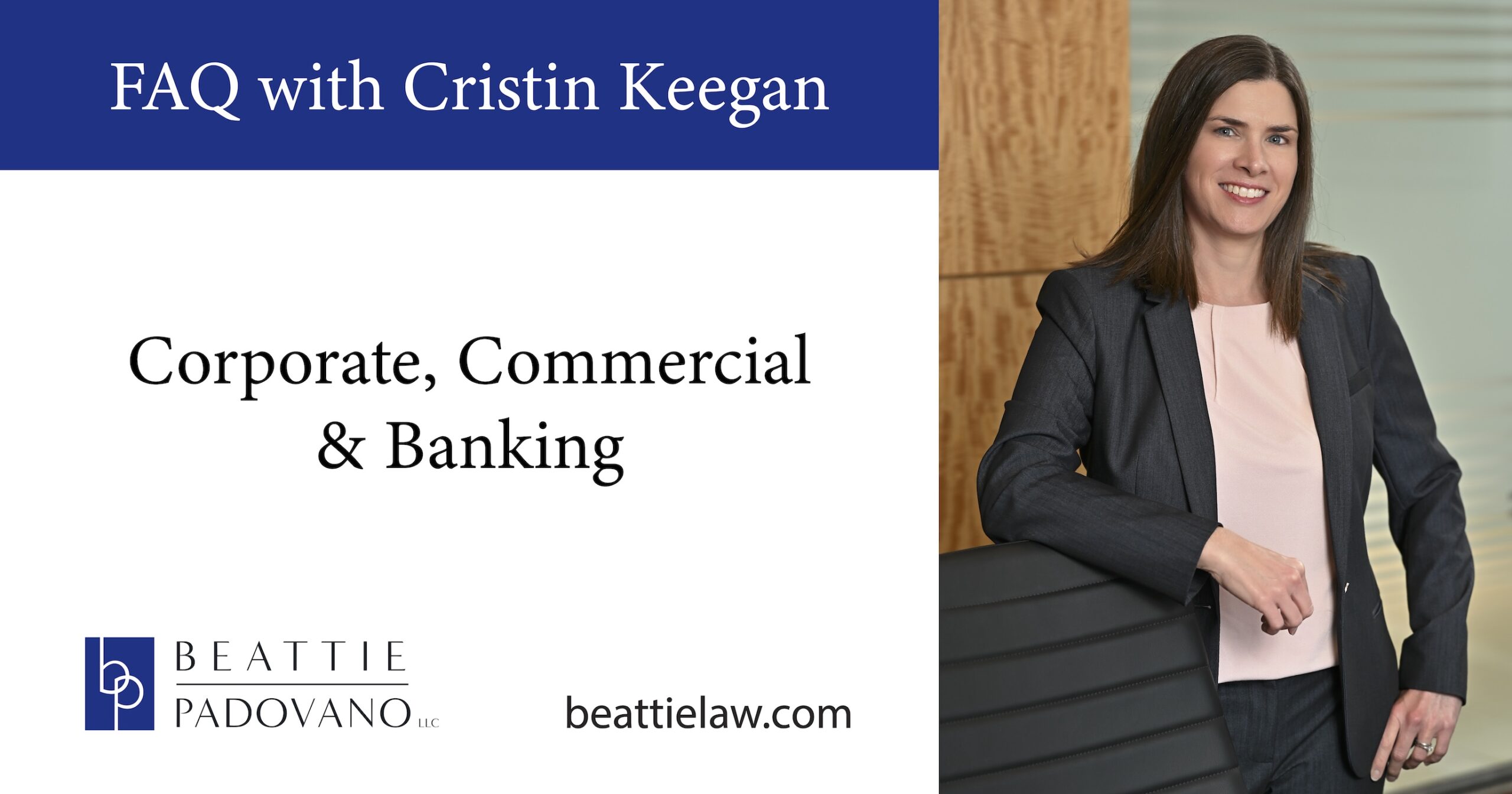
Cristin Keegan, Of Counsel, Beattie Padovano, LLC
My friend and I intend to launch a business. Should we create a formal entity?
Yes, forming an entity is highly recommended, even when only one person will be involved with ownership of the business.
What is the appropriate structure for our new business?
If your business is providing professional services such as dental, medical, architectural, etc., then you will want to establish a professional corporation. For any other type of business, the most common entity structures are a partnership, limited liability company (LLC), and corporation.
Of those, both a limited liability company and corporation offer protection against personal liability of the owners. And, for a small business, setting up a limited liability company means that you will have greater flexibility when it comes to operating the company (in contrast to a corporate structure, which has more restrictions.)
What documents will we need to prepare in order to form an LLC in New Jersey?
In New Jersey, a limited liability company is formed by filing a Certificate of Formation with the New Jersey Department of the Treasury, Division of Revenue and Enterprise Service. In addition, you should have an operating agreement, which establishes guidelines for how the business will be managed and how your profits will be distributed.
My business partner and I have been best friends for years and envision a 50/50 partnership. Do we really need an operating agreement?
Even in two-party limited liability companies, operating agreements protect the interests of the members. If an LLC does not have an operating agreement, the provisions of the New Jersey Revised Uniform Limited Liability Company Acts apply, and there are many provisions of the Act which may not reflect the intentions of your LLC members.
What is included in an operating agreement?
The operating agreement safeguards the interests of both parties during the course of their lives, and also upon the death of one or both of the members. Even in a two-person LLC, the operating agreement establishes how decisions are made, whether each member can act on behalf of the company (without consent from the other member), and what decisions require the consent of both members. A word of caution in a 50/50 split is that if a decision requires “majority consent” and the members happen to disagree, you may experience a deadlock situation which makes it difficult to move forward, and can lead to longer-term conflict among members.
Do you have any other advice for friends who are embarking on the journey of owning a business together?
Clearly identify roles, responsibilities, and expectations. Have the conversations now about the difficult topics and worst-case scenarios. It may be unpleasant but it will make things easier in the long run. Also meet frequently to discuss how things are going and what the future of the business looks like; be honest about both challenges and opportunities. The importance of frequent, open communication cannot be overstated.
As part of the Corporate, Commercial & Banking group at Beattie Padovano, LLC, Cristin Keegan focuses on corporate law, commercial real estate, and intellectual property. Her practice encompasses mergers and acquisitions, corporate reorganization, and general company counseling such as organization, incorporation and drafting by-laws, shareholders agreements, operating agreements, and associated corporate documents.
Cristin’s commercial real estate experience includes negotiating and drafting purchase and sale agreements and leases for a wide range of clients, from sole proprietors to multinational publicly traded corporations. She also advises clients on a variety of intellectual property matters with an emphasis on trademark registration, maintenance and protection.
Learn more about Cristin Keegan, Of Counsel at Beattie Padovano, LLC, visit Cristin M. Keegan – Beattie Padovano, LLC
No aspect of this advertisement has been approved by the New Jersey Supreme Court. This publication is for informational purposes. It does not constitute legal advice or create an attorney-client relationship. The content is current as of date and time of its publication. It may not reflect developments or changes in the law that have occurred since its publication. Beattie Padovano, LLC, and the attorneys that authored this content disclaim any and all liability with respect to actions taken or not taken based on any or all of the contents of this publication. For further information, please contact the attorneys who authored this publication.