
The Impact of Environmental Law on Real Estate Transactions: Frequently Asked Questions
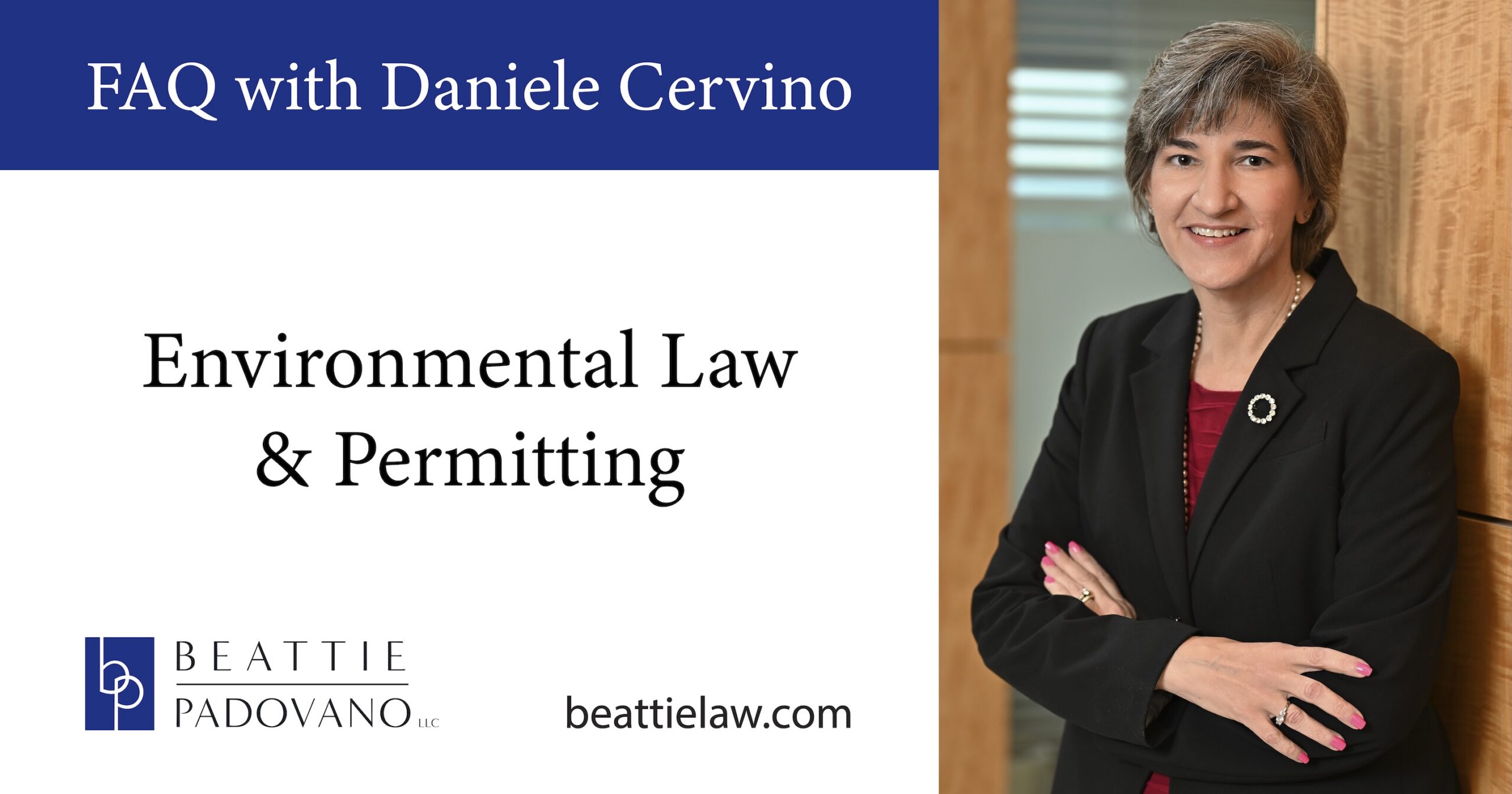
The Impact of Environmental Law on Real Estate Transactions: Frequently Asked Questions
Daniele Cervino, Member, Beattie Padovano, LLC
How do environmental regulations tend to impact property use, and how do I learn what they are and develop a strategy to stay in compliance?
Environmental regulations can impact the viability of a property use or redevelopment. Sensitive environmental features such as wetlands, flood plains, water courses and the availability of water and sewer can significantly impact development. Certain approvals last for 5 years and can be extended to protect against changes in regulations.
Most changes in regulations are not widely publicized, so check in with counsel and your engineering firm; they will keep abreast of changes in regulations that can help ensure that you stay in compliance.
What are the most common environmental issues that arise when your clients buy or sell property?
In residential settings, unknown underground storage tanks, septics, potable wells and asbestos are the most common issues.
In commercial settings, the buyer needs the right to conduct comprehensive due diligence testing and the Seller may seek to limit the scope and duration of the investigation while seeking full releases and indemnities.
What happens if contamination is discovered on a property that I have already purchased for development?
The presence of contamination does not typically stop construction. Carefully coordinated remedial efforts with site redevelopment can prove to be cost effective.
The discovery could jeopardize financing or require that funds be put aside to satisfy a lender, but the discovery alone is not a deal breaker. One should review the contract of sale to see if there is any recourse against the seller for cost recovery.
Can I be held liable for environmental violations that occurred before I purchased a piece of land?
Yes, the law places responsibility for contamination on the current property owner and the owner and operator that owned at the time of the discharge.
There are certain protections if adequate due diligence is conducted before an acquisition, however the presence of contamination can impact the marketability and financing of the property. Certain strategies can be employed to seek recovery of costs from responsible parties if they have not liquidated their assets. Insurance policies can also be a source of funding for remedial obligations. There are also limited avenues for public grants and loans.
What can I do if a neighboring business or homeowner engages in activities that pollute my property?
Neighboring property owners are responsible for contamination migrating from their site. Notice to their licensed site remediation professional and NJDEP is needed if they are not aware of the migration. Access and indemnity agreements can be used to add in protections and assurances of compliance if access is needed to investigate groundwater contamination or vapor intrusion from offsite impacts.
Chair of the firm’s Environmental Law & Permitting practice, Daniele represents clients in connection with a variety of environmental regulatory and transaction issues. She has represented private equity firms and developers in environmental due diligence and environmental aspects of transactions, risk mitigation and insurance coverage. She has also counseled many companies on environmental compliance and cost recovery matters.
Daniele has served as Senior Vice President and General Counsel for Environmental Waste Management Associates (Parsippany, New Jersey), an environmental consulting and remediation firm and its related companies. She negotiated dozens of insured fixed price remediation contracts and environmental insurance policies and associated claims.
To learn more about Daniele Cervino, Member at Beattie Padovano, LLC, visit Daniele Cervino – Beattie Padovano, LLC
No aspect of this advertisement has been approved by the New Jersey Supreme Court. This publication is for informational purposes. It does not constitute legal advice or create an attorney-client relationship. The content is current as of date and time of its publication. It may not reflect developments or changes in the law that have occurred since its publication. Beattie Padovano, LLC, and the attorneys that authored this content disclaim any and all liability with respect to actions taken or not taken based on any or all of the contents of this publication. For further information, please contact the attorneys who authored this publication.